
HygieneHub · Grip-X field guide
Understand the number. Choose with confidence.
A clear guide to mil, measurement points and pack comparisons.

Nitrile glove thickness is often stated in mil. One mil is one-thousandth of an inch, equal to 0.0254 millimeters. It is a measurement of thickness, not a glove size or a complete performance rating.
When comparing heavy duty nitrile gloves, first check where the measurement was taken. A palm measurement from one glove should not be compared directly with a fingertip measurement from another.
Mil-to-millimeter conversion
| Thickness | Millimeters |
|---|---|
| 4 mil | 0.1016 mm |
| 6 mil | 0.1524 mm |
| 8 mil | 0.2032 mm |
| 10 mil | 0.2540 mm |
| 12 mil | 0.3048 mm |
These are unit conversions, not thickness specifications for a particular Grip-X model. To convert mil to millimeters, multiply by 0.0254. To convert millimeters to mil, divide by 0.0254.
Ask where thickness was measured
A glove can have different thicknesses at the fingertip, palm and cuff. Texture can also make the measurement location relevant. Look for a named location rather than comparing the largest number in each listing.
Published manufacturer specifications can distinguish palm and finger thickness. For example, this Ansell product data sheet lists the two separately. That illustrates how to read specifications; it does not provide specifications or certification for Grip-X.
Before comparing two glove listings
- Match the units. Convert both figures to mil or both to millimeters.
- Match the location. Compare palm with palm or fingertip with fingertip.
- Check the wording. A typical measurement and an “up to” maximum describe different things.
- Confirm the model. Check the selected color, size and product version.
- Compare the task requirements. Use the relevant performance information as well as thickness.
What does “up to” mean?
An “up to” thickness claim gives a maximum stated figure. It does not establish that the entire glove, every size or every product in a range has that thickness. Check the exact model and measurement location before making a comparison.
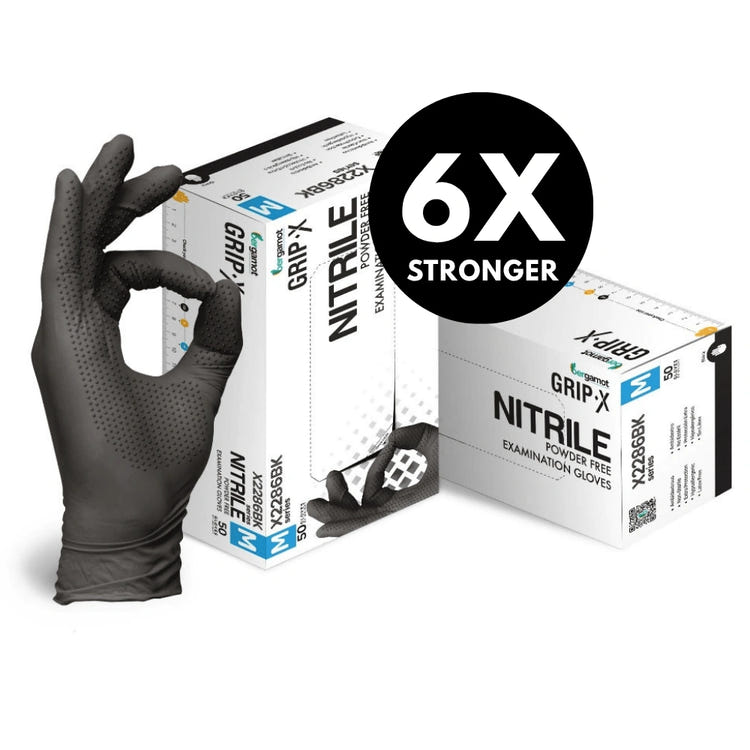
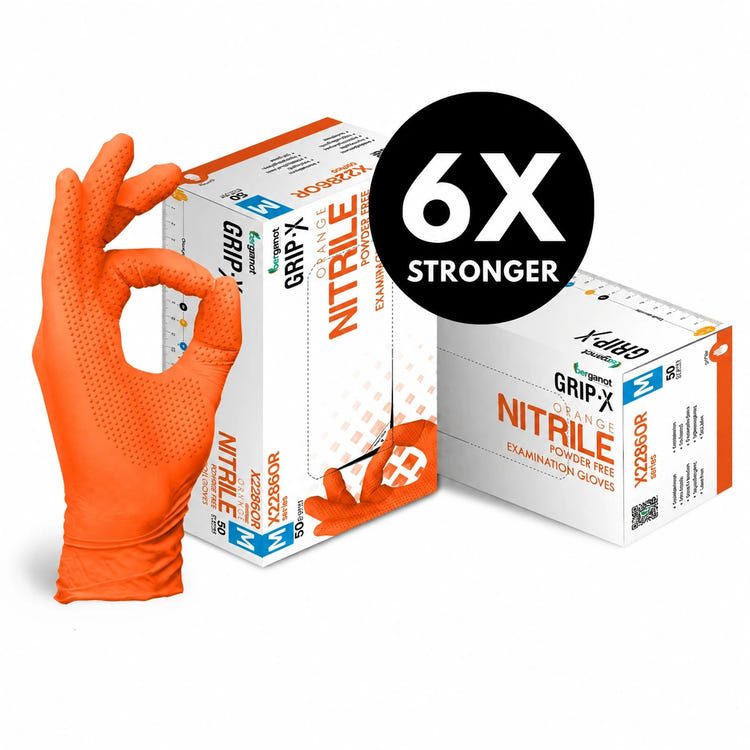
HygieneHub describes the Grip-X range as up to 12 mil. If you need a model-specific palm or fingertip measurement, contact us before purchase. Do not treat the range maximum as the measured thickness of every black or orange option.
Thickness is one part of the choice
Compare thickness alongside fit, texture and the task. A larger thickness number alone does not prove a glove is stronger than another model, or suitable for a particular hazard. Material formulation and the relevant performance information also matter.
If your work needs a specific protective rating, choose using the appropriate model-specific information and workplace requirements. Do not convert a thickness number into a cut, heat or chemical-protection rating.
Compare pack quantities separately
Thickness does not tell you how many gloves are supplied. Check the selected pack quantity and whether the listing counts individual gloves or pairs. For example, 10 individual gloves make five pairs; 50 individual gloves make 25 pairs.
For a bundle, check every selected pack before calculating its total quantity. This makes it easier to compare the price per glove without confusing a larger pack with a thicker glove.
Compare Grip-X options
Browse black heavy duty nitrile gloves and orange heavy duty nitrile gloves, then review the options on the product you intend to order.
For the broader selection checklist, read our heavy duty nitrile glove buying guide. For a specific measurement question, contact HygieneHub.
Thickness is only one part of choosing a glove. Use our nitrile glove sizing and fit guide to check finger length, palm fit and cuff comfort.
Common questions
Is mil the same as millimeter?
No. One mil equals 0.0254 mm. A 10-mil measurement is 0.254 mm, not 10 mm.
Is a 12-mil glove automatically better than an 8-mil glove?
Not for every task. First compare the same measurement location, then assess fit and the properties required for your work.
Does thicker mean suitable for every chemical?
No. Thickness alone does not establish compatibility with a chemical or the permitted contact duration.